
Weed Control Without Chemicals: The Ground Cover Method
Chemical weed control carries a growing list of costs that never appear on the herbicide invoice: residue concerns on food crops, drift damage to neighbours, declining soil biology, and certification trouble for organic and export growers. But the alternative most people imagine — endless hand weeding — is genuinely brutal. There is a third way: physical weed exclusion, using woven ground cover to stop weeds germinating at all. Here is how the method works and how real growers build systems around it.
The principle: starve seeds of light, don't fight the plant
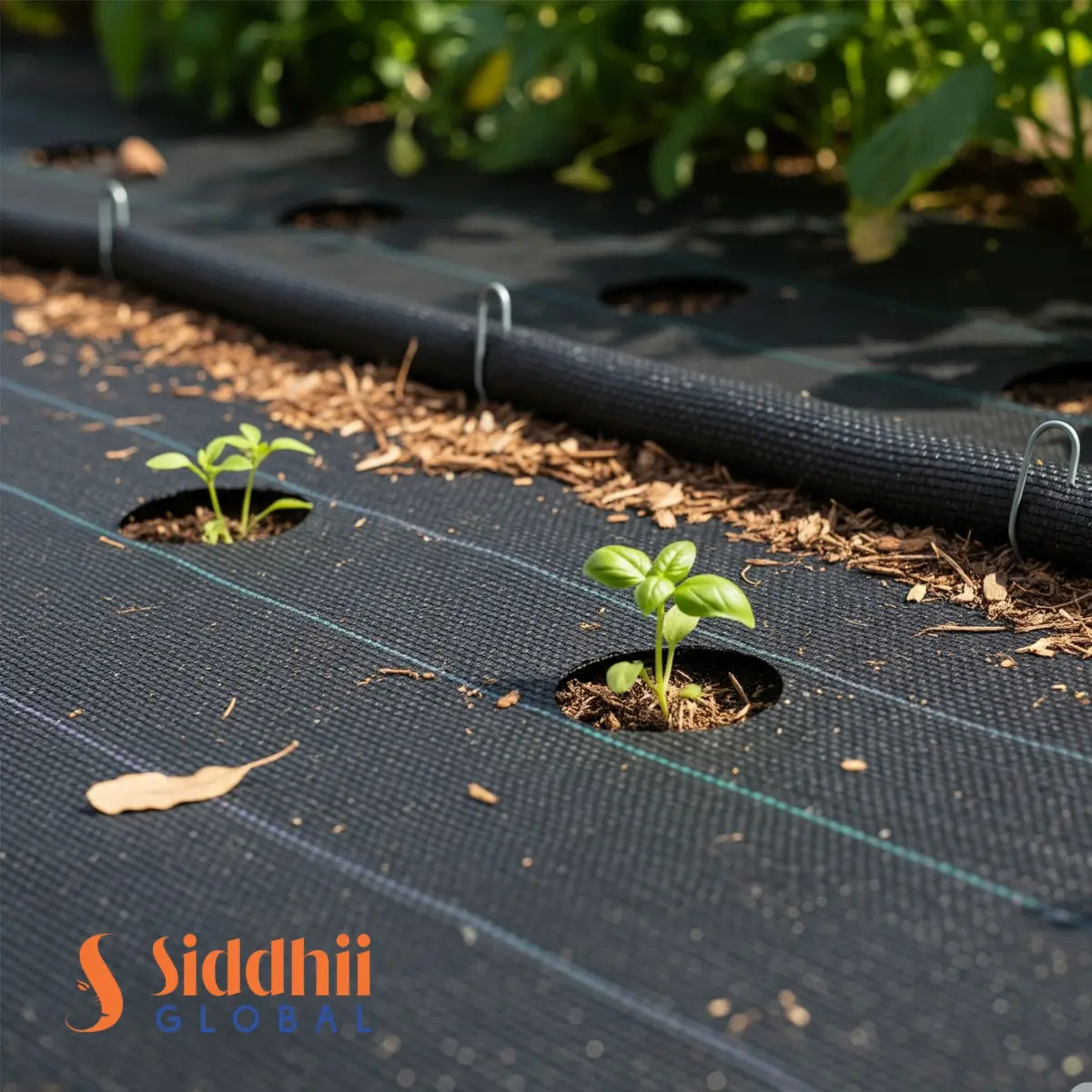
A weed seed needs light, moisture and soil contact to germinate. Herbicide kills the plant after it grows; ground cover prevents the growth from starting. A woven polypropylene mat laid on the soil blocks light completely while letting water and air pass through to the soil below. Seeds under the mat stay dormant indefinitely. Weeds survive only where you deliberately open the fabric — planting slits — and those few are a ten-second hand pull instead of a day's work.
The fabric we use for this is the same woven polypropylene that nurseries and polyhouses standardise on — 100 GSM for most jobs, 120 GSM where sun and traffic are heavy. Its permeability is the non-negotiable part: unlike plastic sheeting, the soil underneath keeps breathing and biology keeps working — a distinction we detail in the plastic-vs-mat comparison.
Building a chemical-free system, area by area
Vegetable and flower beds
Lay mat over prepared beds, cut minimal slits, transplant through. Between crops, the bed surface needs only sweeping and slit-weeding. Inter-row spaces stay permanently covered. Weeding labour typically drops 80%+ in the first season — the farm cost analysis quantifies it.
Orchard basins and tree rings
Basins are where hoe damage to roots and hand weeding costs concentrate. Fabric rings around trunks — or purpose-made round mats with chain edges — keep basins clean without a single spray. The orchard guide sizes rings by tree age.
Paths, yards and floors
Under gravel and on nursery floors, exclusion is total — no slits, no weeds, ever, as covered in the gravel guide and nursery flooring guide.
Combining methods: what organic growers actually do
Ground cover is the backbone, not the whole skeleton. The growers who succeed without chemicals stack three or four methods:
- Exclusion (the mat): Handles 90%+ of weed pressure permanently across beds, basins and paths
- Mulch on top: Where aesthetics or soil building matter, 2–3 cm of straw or cocopeat over the fabric adds a second barrier and feeds soil as it breaks down — without becoming a weed bed itself, because no light reaches the media from below
- Timely hand work in slits: Five minutes weekly beats five hours monthly — weeds pulled young in planting slits never seed
- Thermal weeding for odd corners: A flame weeder handles fence lines and gravel edges where fabric does not reach
- Clean edges and borders: Most weed seeds arrive from unmanged margins; a fabric strip along boundaries stops the migration
The questions buyers ask before switching
Does soil health suffer under ground cover?
No — the opposite, in practice. Permeable fabric keeps moisture even and temperature buffered, and earthworm activity continues underneath. The soil is never churned by hoeing, so structure improves season over season. What you must not do is use plastic sheet: sealed soil goes anaerobic and biology collapses.
What about weeds growing in the mulch on top of the mat?
Keep top layers thin — under 3 cm. Deeper organic layers hold enough moisture at the surface for airborne seeds to root. Thin layers stay dry enough on top that seedlings desiccate before establishing.
Is this viable for certified organic farming?
Woven polypropylene ground cover is accepted in organic systems precisely because it is physical control — no residues, no inputs. Certifiers care about contact with soil, and inert fabric is fine. Verify with your own certifying body for your specific scheme.
How long before the system pays for itself?
Against hand weeding, 1–2 seasons on most areas — the cost-benefit breakdown runs the numbers. Against chemical programs, the comparison includes the certification and residue value you protect.
The honest limitation
Ground cover suits permanent and semi-permanent plantings — beds, basins, floors, paths. It does not fit plots that get deep-tilled across their full area every season; fabric cannot live through ploughing. For those systems, rotation-based weed management remains the tool. For everything else — the areas where you currently pay for weeding year after year — exclusion is the cheapest, safest, most permanent method available, and the first season's results are usually what converts sceptics. The buying guide sizes your first order; the installation steps make sure it performs to its rated life.
Shop the products mentioned
Premium weed control mats & jewellery — free shipping above ₹999.