
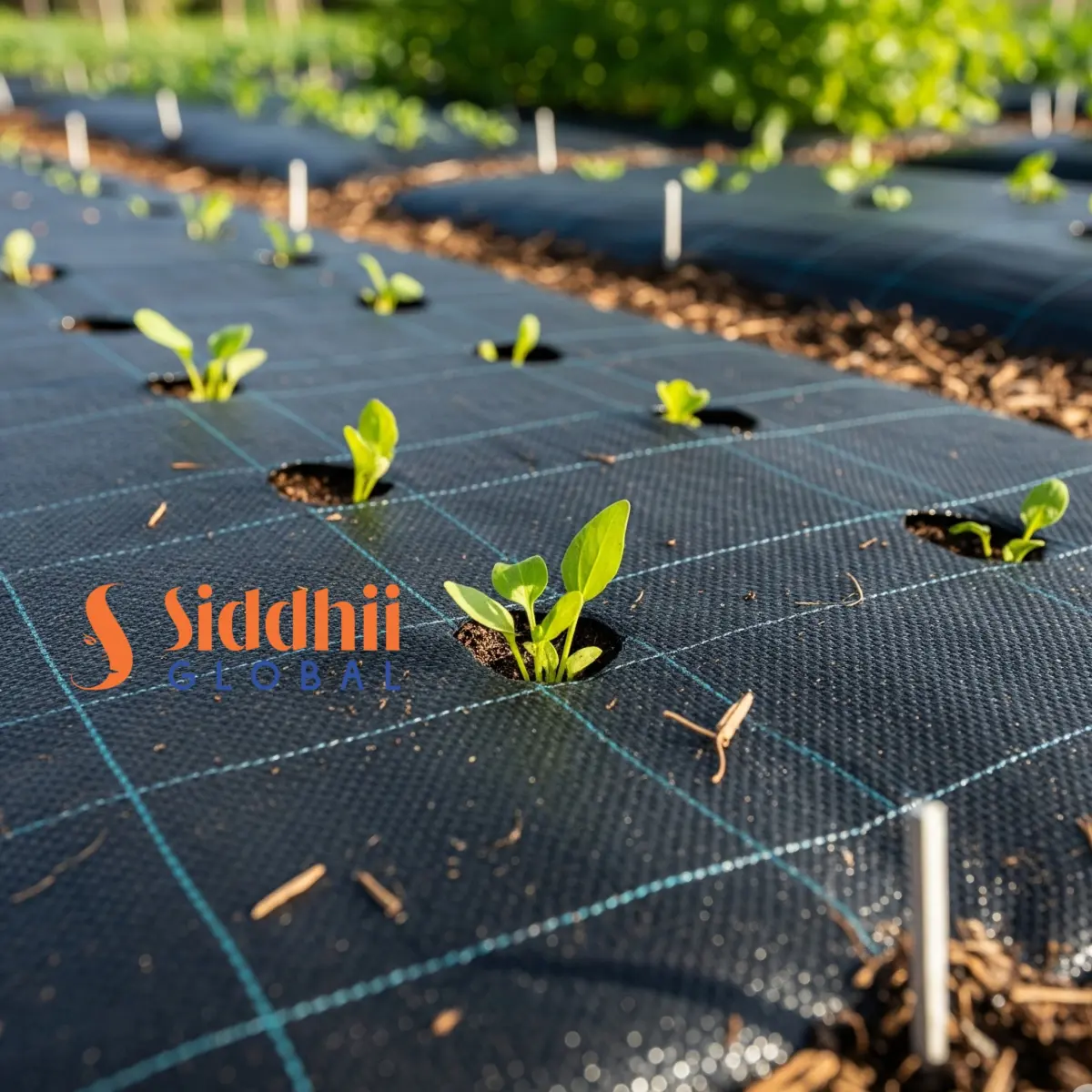
Weed Mat for Plant Nursery: Flooring Guide for Growers
Visit a well-run plant nursery and look down. The floor is clean, level, dry and completely weed-free — and that is not luck or constant hand-weeding. It is a woven ground cover, and in the nursery business it is one of the highest-return investments per square metre. If you are setting up a nursery or renovating one, here is exactly how weed mat nursery flooring works and what to order.
Why nursery floors need ground cover more than anything else
Nursery plants live in pots, bags and trays sitting on the ground. Three problems follow automatically:
- Root escape: Roots exit drainage holes and tie into the soil below. When you shift the pot, roots tear off and the plant sulk for weeks. Ground cover stops rooting-in completely — pots lift clean.
- Weed competition: Weeds seed into pot media and from below. A weed mat blocks both routes, cutting pot-weeding labour to almost zero.
- Mud and disease: Bare nursery floors turn to mud in monsoon. Mud on trays means mud on benches, hands and leaves — plus fungal spores riding the splash. Fabric keeps the surface dry enough to work on the day after rain.
Choosing the GSM for nursery use
Nursery floors see foot traffic, trolleys, thousands of pot movements and spillage of media — but little direct sun in covered sections. For most nurseries, 100 GSM woven ground cover is the sweet spot: strong enough for daily traffic, permeable for drainage, and priced so covering even a large hardening area stays affordable. Open-air hardening yards in high-UV zones or areas with loaded trolleys justify 120 GSM for the extra puncture resistance.
Small boutique nurseries and terrace sellers often start with individual 1.2x1.2 m ready mats under display tables — no cutting needed, movable when the layout changes.
Layout planning that saves money
Calculate true coverage, not plot area
Measure the actual floor area of propagating sheds, hardening yards and walkways where pots sit. Unused corners and vehicle tracks do not need fabric. Most nurseries cover 60–75% of total plot area. A 1x100 m roll gives about 100 sq m; order your roll count from the covered figure plus 10% overlap allowance, not from the plot's gross area.
Prepare the base once, properly
The classic nursery mistake is laying fabric over uneven, stony ground. Every stone becomes a pressure point that wears the weave from below. Grade the area, remove stones, and if budget allows, spread 3–4 cm of sand or fine gravel as a base layer before the mat. This single step is the difference between a floor that lasts five years and one that needs patching in two.
Slope for drainage
Woven ground cover passes water, but standing water still means algae and mud tracking. Grade the floor gently toward drains. For polyhouse-style nursery sheds, a 1–2% slope is enough. The polyhouse flooring guide shows the same principle applied inside structures.
Day-to-day practice on a covered nursery floor
Life changes in small ways that add up. Spilled cocopeat sweeps up instead of mixing into mud. Tray lines stay where you put them. Monsoon potting continues on schedule because the floor is workable. Volunteers and new staff cannot accidentally weed out seedlings — because there are no weeds to confuse with them. And between batches, a wash with water and your usual sanitiser resets the surface for the next cycle.
The one discipline that matters: keep media spillage swept. If you let spilled cocopeat pile up on the fabric, it becomes a shallow potting bed where airborne weeds germinate — on top of the mat instead of through it. Five minutes of sweeping a day prevents the whole problem.
What nursery owners report after switching
- Pot-weeding labour drops by 80–90% — the few weeds that appear sit in media tops, not the floor
- Plants shift without root shock, so shrinkage on moved stock falls visibly
- Monsoon sales stop getting cancelled by unworkable floors
- The same floor serves every batch — no rebuilding between cycles
One mid-size nursery we supply calculated the roll cost against one year of weeding and floor-repair labour and recovered it inside the first monsoon. After that, the fabric simply kept paying. If you are weighing this decision for a bigger operation, the farm cost breakdown uses the same logic at field scale.
Frequently Asked Questions
Which weed mat is best for a plant nursery floor?
100 GSM woven ground cover suits most nursery floors. Use 120 GSM in open hardening yards with heavy sun or trolley traffic. Both allow water drainage and stop root escape from pots.
Do nursery pots still need saucers over weed mat?
Usually no. The fabric drains freely, so excess irrigation water passes through. Saucers matter only for indoor retail display benches.
How long does nursery ground cover last?
With a prepared base, 100 GSM lasts 4–6 years in covered sections and 3–5 years in open yards. The base layer under the mat decides most of its life.
Can I lay nursery weed mat over existing grass?
Remove or scalper the grass first. Laying over thick turf leaves organic matter that rots unevenly below the fabric and creates soft patches.
For the first purchase decision, the India buying guide compares GSM and sizes in detail, and once your roll arrives, the installation steps get it pinned down in an afternoon.
Shop the products mentioned
Premium weed control mats & jewellery — free shipping above ₹999.