
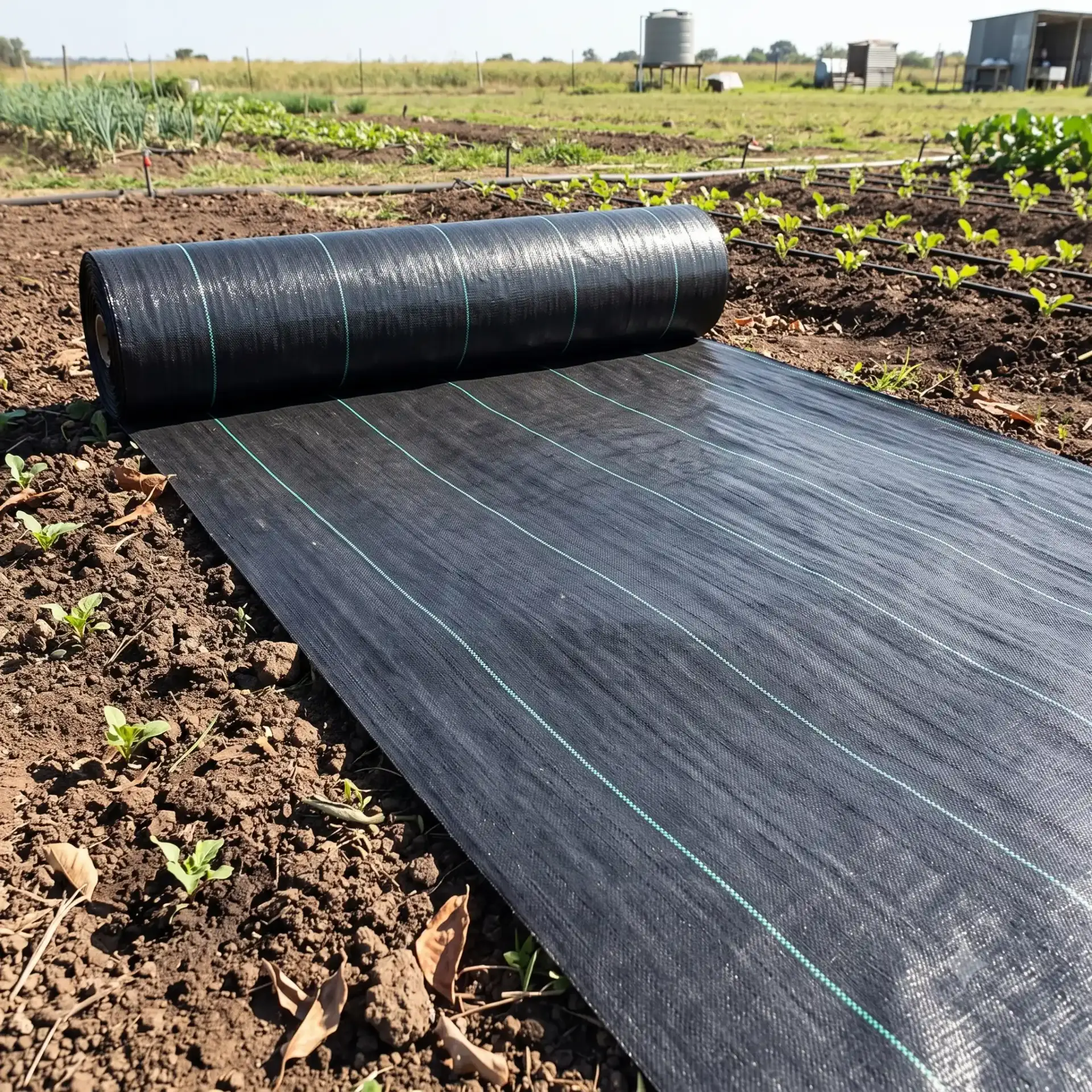
Best Weed Mat for Polyhouse Farming: GSM & Bed Guide
Inside a polyhouse, weeds are not just an eyesore — they compete with crop roots in raised beds, harbour fungus gnats and whitefly, and turn walkways into mud channels after every fertigation cycle. A proper weed mat for polyhouse use solves all three at once, which is why every serious gerbera, rose, capsicum and cucumber grower we supply lays ground cover before the first planting. Here is how to choose the right one for your structure.
Why polyhouses need ground cover more than open fields do
Open-field weeds grow in competition with the sun and rain. Polyhouse weeds grow in a protected, humid, fertilised environment — the same conditions you built for your crop. Weeds inside a structure establish faster and seed faster than they would outside. On top of that, polyhouse floors get constant drip and fertigation overflow, so bare soil becomes slippery mud within weeks. A woven ground cover keeps beds clean, keeps walkways trafficable, and stops soil splash onto lower leaves — which itself reduces leaf disease pressure.
100 GSM or 120 GSM for polyhouse use?
Both work inside a structure. The differences come down to traffic and lifespan:
- 100 GSM woven ground cover: The working choice for beds and low-traffic walkways. Handles daily foot traffic, drip overflow and cleaning. Inside a polyhouse, shielded from direct UV, it comfortably lasts 5+ years. Our 100 GSM roll is what most flower growers order for standard gutters.
- 120 GSM woven ground cover: For structures with trolley traffic, heavy pots, or when you want the floor to outlive multiple crop cycles without thinking about it. The 120 GSM version also tolerates rougher installation — important when labourers drag bags of cocopeat across the floor.
Because polyhouse floors are shaded by the roof, UV is not the limiting factor inside. Tearing and puncturing are. If your structure sees machinery, trolleys or frequent rearranging, pay the extra for 120 GSM and stop worrying about it.
How to plan the layout before the roll arrives
Measure beds and walkways separately
Walkway strips take more wear than bed strips, so give walkways the wider overlap. For a standard 8 m wide polyhouse bay with two crop beds, plan one strip per bed plus one centre walkway strip. A 1x100 m roll covers about 100 sq m — measure your total floor area and add 10% for overlaps and offcuts before ordering.
Prepare the floor properly
Level the ground, remove stones and stubble, and create a slight slope toward your drain points. Ground cover fabric is permeable — water passes through — so drainage underneath decides whether your floor stays clean or grows algae. Many growers lay the mat over a thin layer of sand or fine gravel for even more even drainage; that also stops sharp stones from pushing through the weave over time.
Pin, then plant
Fix the fabric with ground pins or weighing edges every metre on walkways. Overlap strips by 15 cm with the downstream strip on top so water never runs under the seam. Cut planting holes with a sharp blade only where needed — the fewer slits, the fewer weed entry points. Our general 7-step installation guide covers the laying process in detail; polyhouse laying is identical, just neater.
Beds: mat over or mat under?
Two schools of practice exist. Laying mat on the bed surface and planting through slits keeps the bed completely weed-free and reflects some light up into the canopy. Covering the mat with a thin cocopeat or media layer hides the fabric and moderates root-zone temperature. Both are valid — the first is easier to clean between cycles, the second suits crops sensitive to root heat. Avoid thick media on top though; media depth above the fabric becomes a weed bed itself if it is more than 2–3 cm.
Cleaning and reuse between crop cycles
One underrated advantage of ground cover in polyhouses: between crops, you sweep, wash and disinfect the entire floor in an hour instead of hiring labour to hand-weed. The mat sheds spillage, media crumbs and plant debris. At the end of a cycle, remove crop residue, wash the surface with water, and apply your usual disinfectant — the fabric tolerates standard polyhouse sanitising chemicals. This turnaround speed is a real production advantage during peak season when every empty day costs you a crop slot.
Frequently Asked Questions
Which GSM weed mat is best for a polyhouse?
100 GSM works well for beds and normal walkways. Choose 120 GSM when trolleys, machinery or heavy pots will run over the floor. Both last years inside because the roof blocks most UV.
Does water drain through polyhouse ground cover?
Yes, woven weed mat is permeable. Irrigation and fertigation overflow pass through to the floor below. Good under-floor drainage and slight grading keep the surface dry and algae-free.
How long does weed mat last inside a polyhouse?
Expect 5 years or more from 100 GSM and longer from 120 GSM. Shaded from direct sun, the fabric mainly needs to resist punctures and traffic rather than UV breakdown.
Can I lay weed mat over existing weeds in a polyhouse?
Cut or remove tall weeds first. The mat blocks light and will suppress regrowth, but laying over established tall growth creates uneven surfaces and seam gaps.
For a complete floor plan including bed prep, our nursery flooring guide covers similar layouts, and the farm cost breakdown shows how quickly ground cover pays for itself at larger scale.
Shop the products mentioned
Premium weed control mats & jewellery — free shipping above ₹999.