

How to Shop Online on a Budget (Without Fake Discounts)
Budget shopping online has a paradox at its centre: the people trying hardest to save are the ones most targeted by fake discounts. Countdown timers, crossed-out MRPs, "only 2 left" banners — the machinery is built to make urgency do your thinking. We sell on thin margins ourselves, so we know exactly how the pricing games work from the inside. Here is the honest budget playbook: how to spot the theatre, when real discounts happen, and the three maths tricks that save more than any coupon ever will.
The MRP game, decoded
Start with the oldest trick: the inflated reference price. A set shows "₹1,299 struck out, now ₹499, 62% off!" — but the set never sold at ₹1,299; the strike-through was invented for today's banner. The defence costs nothing: ignore the percentage, judge the absolute price. Ask one question — "is ₹499 a sensible real-world price for four matched jewellery pieces?" If yes, buy; if no, leave. On honest stores (ours included), prices stay stable year-round — our ₹249 sets cost ₹249 in January and ₹249 in Diwali week — because the product's real cost does not change with the festival calendar. Stable pricing is itself a trust signal: the genuine-store checks list it among the tells.
When real discounts actually happen
Real discounts exist, and they follow a pattern worth learning. Festive waves (Dussehra-Diwali, the wedding run) bring genuine but modest reductions — think 5-15% or bundle value, not fantasy slashes, and the mechanics are mapped in our festive calendar. End-of-season clearances are real when categories turnover (fashion before new stock arrives). And free-shipping thresholds are the quiet bulk discount nobody counts: two small orders at ₹49 shipping each cost more than one combined order above a free-shipping bar. The meta-rule: real discounts reward patience; fake ones punish hesitation.
Trick one: per-unit maths
The single most powerful budget skill online is dividing. Listings price by piece, set, roll, metre and pack — deliberately, because confusion hides value. Convert everything to one unit before comparing: jewellery sets to per-piece (a ₹499 4-piece set is ₹125 per piece; four "cheap" singles at ₹150 each are ₹600 — the set-vs-separate maths in full), fabric to per-square-metre (a ₹5,900 short roll can cost more per metre than a ₹6,999 long one — worked out in our per-sqm guide). Sixty seconds of division beats any coupon code in the country.
Trick two: the total-cost check
Budget buyers lose more at checkout than in the catalogue. Before paying, read the actual payable total: product price + shipping + any handling, minus nothing you have not verified. Three habits here — combine orders to kill shipping fees (they compound fast on small items), check whether GST is included or added at the end (it changes your total, and matters doubly if you claim input — see the invoice guide), and watch COD fees where they exist, which quietly price the "free" option above UPI.
Trick three: buy the boring thing once
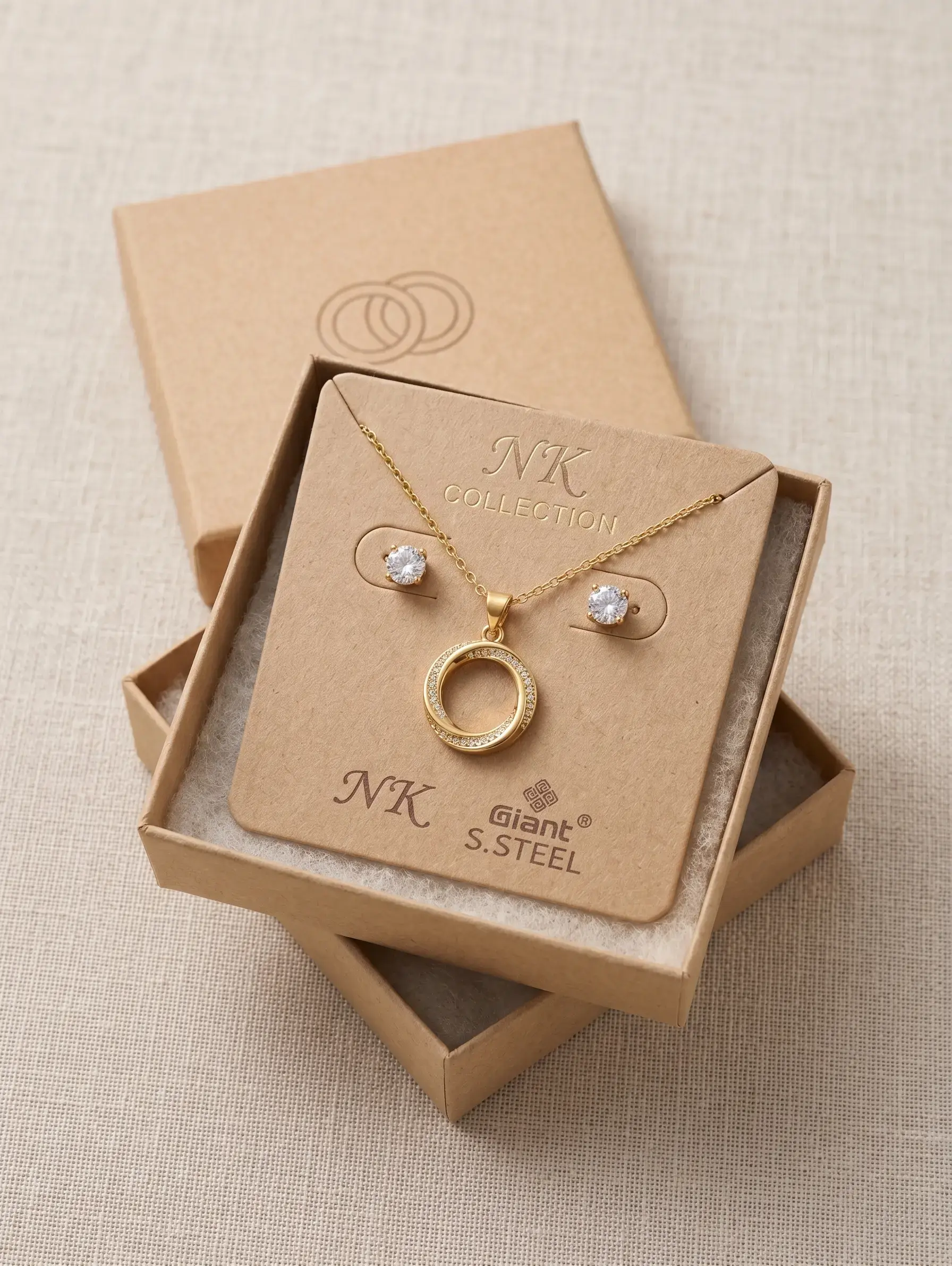
Budget shopping is not buying the cheapest — it is buying so you do not buy twice. The ₹99 set that fades in three weeks costs more per wear than the ₹249 set that lasts seasons (the wear-count maths is in our value guide; the care routine that doubles lifespan is in the care guide). The same logic runs through every category: the 100 GSM roll that survives one clean season beats the mystery-weight roll that frays by monsoon. Cheap is a price; economical is a cost per use. Budget buyers who internalise this stop feeling poor.
The junk-question filter
One filter catches most budget regret before checkout: "would I buy this at full honest price?" Everything you cannot answer yes to is the discount doing the wanting — the fourth showpiece, the third similar top, the gadget for a problem you do not have. Wishlist anything that fails the filter and revisit in 72 hours; most wishlist items die quietly and their money survives. This is also the defence against the countdown timer: real needs survive three days, manufactured urgency does not.
A budget order that actually saves
Put the pieces together the way experienced small-store buyers do: list the actual needs (not wants) across the next month, combine them into one order to clear the shipping threshold, apply per-unit maths on every choice, prefer the stable-price honest store over the loudest banner, pay by the method that fits the order size (UPI for speed, card for the trail), and keep the confirmation screenshot. That single disciplined order beats a season of scattered "deals" — and the money it saves is the boring kind that stays saved.
Budget shopping FAQs
How do I know if a discount is real?
Ignore the percentage and track the absolute price across days — price-tracking habits or simply memory of the page. Real discounts move the absolute number modestly; fake ones move only the struck-out phantom. Stores with stable year-round pricing rarely need the theatre.
Is it cheaper to buy sets or individual items?
Sets, almost always — per-piece maths favours them structurally because one design runs across four products. The exception is gap-filling an existing collection, where you buy only the missing piece.
Do coupon sites actually save money?
Marginally, sometimes — most codes mirror offers already on the store's page. The bigger savings hide in free-shipping thresholds, bundle economics and buying once instead of twice. Coupons are the last 2%; the structure is the first 20%.
What is the biggest hidden cost in online shopping?
Repeat purchases from cheap failures — the ₹99 item bought four times a year quietly outspends the ₹249 item bought once. Track cost per use for a single month and the pattern becomes impossible to unsee.
How do I stop impulse buying online?
The 72-hour wishlist plus the full-price question. Anything that fails "would I buy this at its honest price?" goes to the list, and most of it dies there. Urgency mechanics cannot survive a waiting room.
Shop the products mentioned
Premium weed control mats & jewellery — free shipping above ₹999.