
Jewellery Set vs Buying Separately: What's Better Value?
A customer asked us last month: "set lena better hai ya alag-alag pieces? dono ka total same aa raha hai". The totals were not the same — she had just miscounted because sets hide their value across four line items. This is the question we answer most in DMs, so here is the full maths, honest and itemised, from a store that sells both ways.
First, the actual price maths
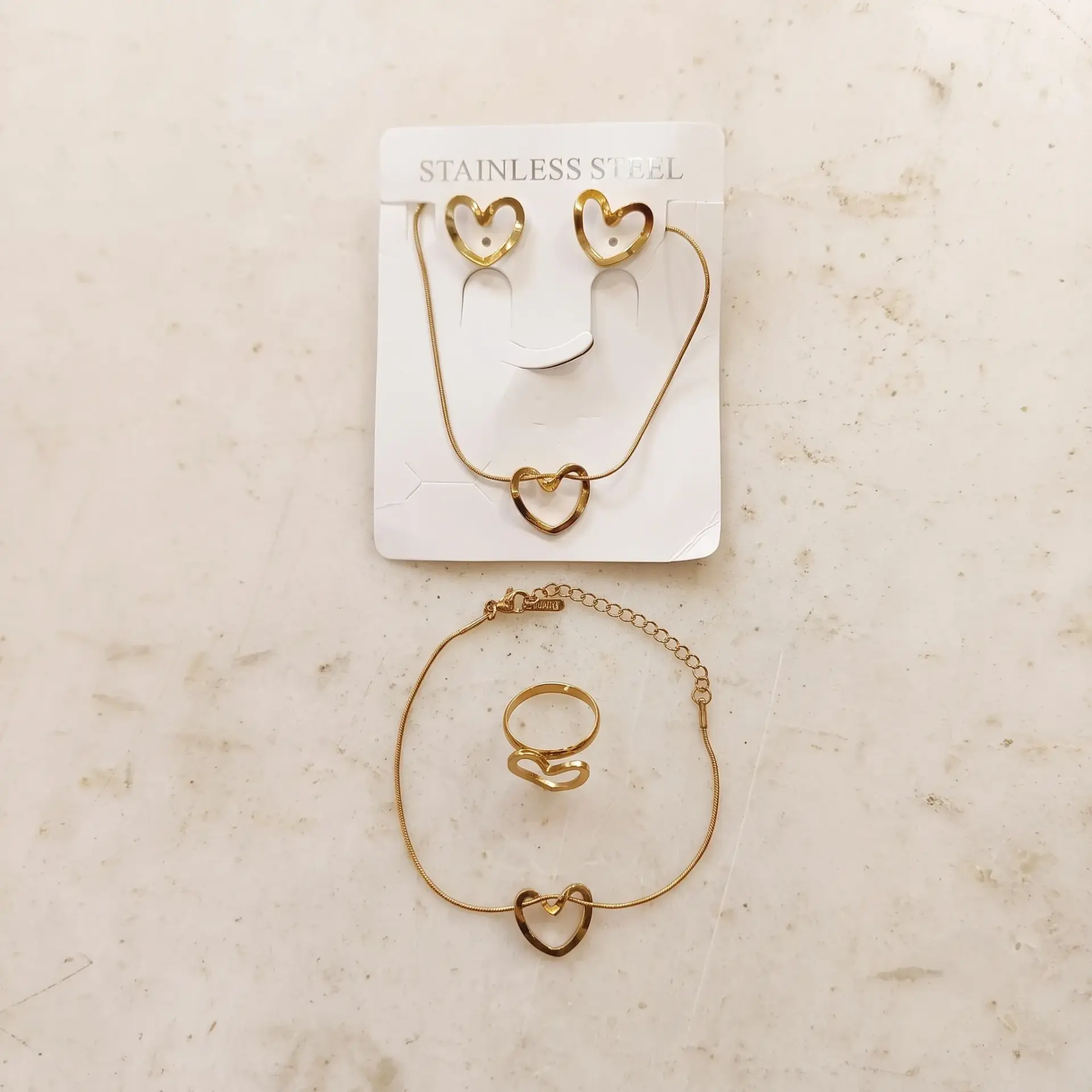
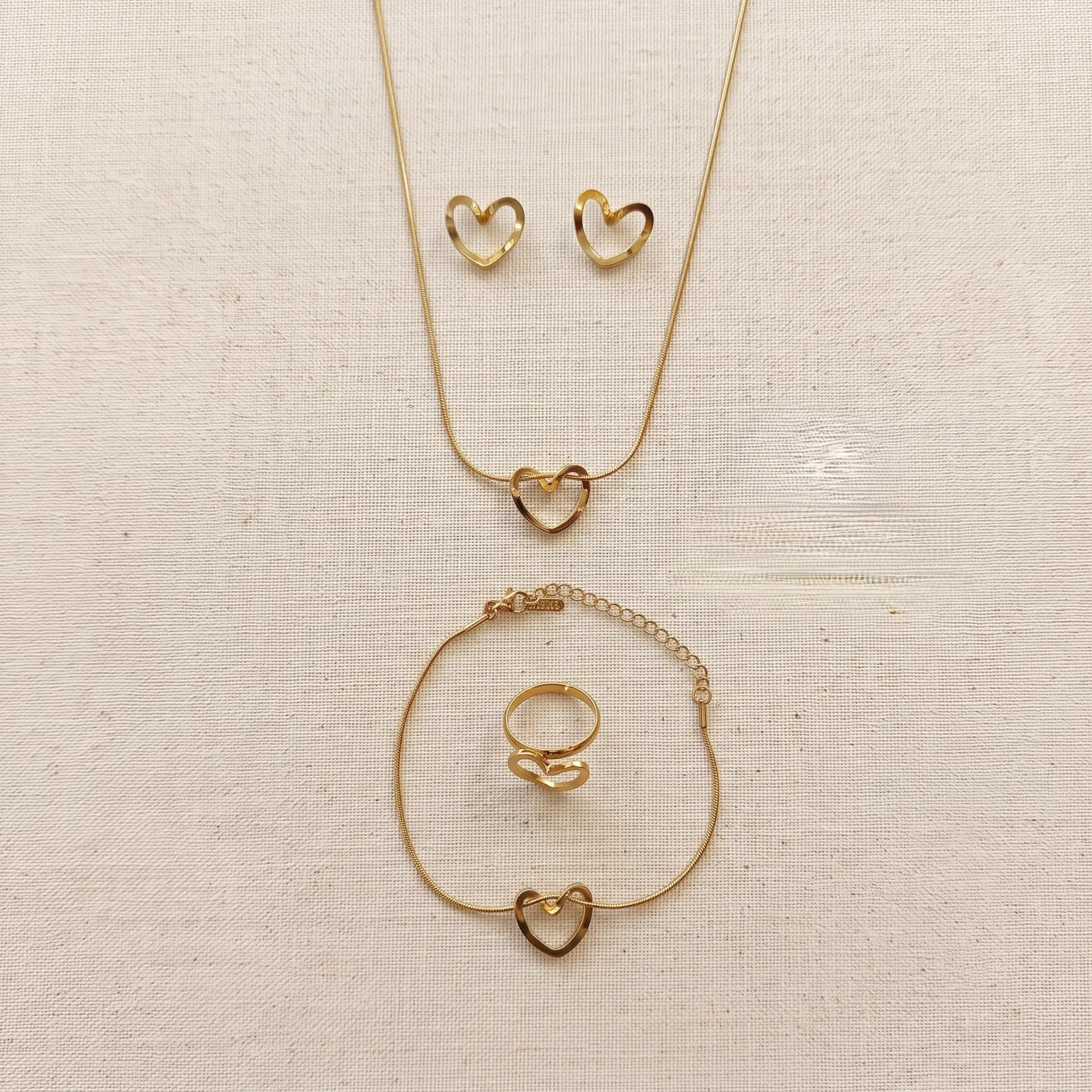
Take our own range as the worked example. The 4-in-1 Heart Jewellery Set (₹499) contains: a pendant necklace, a bracelet, a ring and matched stud earrings — four pieces at effectively ₹125 per piece. Buy the same four categories separately from any comparable-quality source: a standalone pendant chain ₹150-250, a bracelet ₹150-200, a ring ₹100-150, studs ₹100-150 — and two problems appear immediately. First, the total lands at ₹500-750, not ₹499. Second — and this is the part the price tag hides — the four pieces will not match. Different tones of gold, different stone cuts, different design languages. The matched look, which is what makes jewellery read "put together", is precisely the thing you cannot buy separately at any price.
When a matched set clearly wins
- Occasion dressing: functions, weddings, festivals — the matched set photographs as "planned". Mixed pieces read as accident, however good each piece is alone.
- Gifting: one box, four coordinated pieces, zero taste-risk. A set says the giver chose a look, not an item. This is why our festive gift guides lead with sets.
- Building a base wardrobe: first real jewellery collection? A set gives you necklace-earrings-bracelet-ring coverage in one purchase, ready for any event at short notice.
- Value per rupee: ₹125 per matched piece vs ₹150-200 per unmatched piece. The maths is not close.
When separate pieces win instead
Honesty requires the other side. Separate pieces win in three situations. If she already owns a strong matched set and needs one gap-filler — say, just studs for office — a single ₹100-150 purchase beats rebuying a full set. If her taste is deliberately eclectic (mixing silver and gold tone, stacking rings) — matched sets fight that aesthetic. And if you are rotating daily-wear pieces heavily, individual studs and chains take more total wear per rupee than a set's bracelet that gets worn monthly. Note all three situations assume an existing collection — sets are how you start, singles are how you patch.
The wear-count test (the one nobody does)
Before any jewellery purchase, do this quick mental exercise: count the distinct looks a piece creates. The 4-in-1 set creates more than four — full set for functions, necklace plus studs for office, bracelet plus ring for a casual day out, studs alone always. One purchase, four-plus rotations, zero match-worry. A standalone piece creates exactly one look. Cost per look is the real metric, and it is where sets quietly win by a factor of three or four.
Run the same test on price per wear and the gap widens further. A ₹499 set worn across twenty occasions in a year costs ₹25 per occasion; a ₹200 standalone worn to three functions costs ₹67 each. The numbers only flip when a single piece gets heavy weekly use — which is exactly the office-studs case from the section above. Match the purchase shape to the wearing pattern and you will rarely overpay either way.
The same logic works across two ₹249 sets instead of one ₹499 set: the heart pendant set plus the open heart set gives two necklace designs, two earring pairs, and cross-combinations (heart necklace with open-heart studs reads fine since the tones match). Some customers prefer this for variety; the trade-off is no bracelet or ring.
What we would buy, concretely
Starting from zero and spending under ₹500: the 4-in-1 set, no debate — it is the only purchase in that budget that covers four categories with a matched look. Starting from zero with ₹750: the 4-in-1 plus one ₹249 pendant set for daily-wear variety. Already owning a set and just reading this for interest: you are the "singles as patch" customer — buy only the gap, not another full set. And whenever pieces are stored, the pouch-and-wipe routine from our care guide protects whichever strategy you chose.
Set vs separate — FAQs
Is it cheaper to buy a jewellery set or individual pieces?
The set. Our 4-in-1 works out to ₹125 per matched piece; comparable individual pieces total ₹500-750 for four — and they will not match in tone. The matched look is the hidden cost of buying separately.
Can I mix pieces from different sets?
Within the same gold tone and stone style, yes — our sets share a design language, so cross-pairing pendants and studs works. Mixing across random brands risks tone mismatch, which is the single biggest look-killer.
What should I buy first: a set or a standalone pendant?
A set, if you own almost nothing — it covers functions immediately. A standalone pendant only makes sense as a patch after a collection exists, or when one specific gap (like office studs) is the entire need.
Do sets make sense as gifts when I don't know her taste?
Yes — matched sets in classic designs (heart, open heart, circle) are the lowest-risk gift category there is. The pieces coordinate with each other even if one item is not exactly her style, so the gift still works worn in parts.
Shop the products mentioned
Premium weed control mats & jewellery — free shipping above ₹999.