
Weed Mat for Rose & Gerbera Farming: Flower Grower Guide
Flower farming runs on two things: stem quality and speed. Weeds attack both — they steal nutrition from heavy-feeding crops like rose and gerbera, and every weeding round in a flower bed bruises foliage and delays harvest. That is why ground cover became standard practice on commercial flower farms long before vegetable growers adopted it. If you grow roses, gerbera or cut flowers in beds, here is what weed mat under flower crops changes, bed by bed.
What weeds cost a flower crop specifically
In leafy vegetables, a weed's theft is invisible in the harvest. In flowers, it walks straight into the market: thinner stems, smaller blooms, shorter vase life. Gerbera crowns resent root competition during flush cycles; rose bushes channel everything into new flushes and cannot spare it for weeds. Add the mechanical damage — every hand-weeding pass in a dense bed snaps leaves and buds — and weeds cost a flower grower twice: once in nutrition, once in broken stems.
There is also the disease angle. Soil splash onto lower leaves during rain and overhead irrigation spreads leaf spot and botrytis. A fabric floor eliminates splash from bed surfaces, keeping lower foliage dry-side clean — growers notice fewer bottom-leaf problems within the first monsoon of use.
Bed layout with ground cover
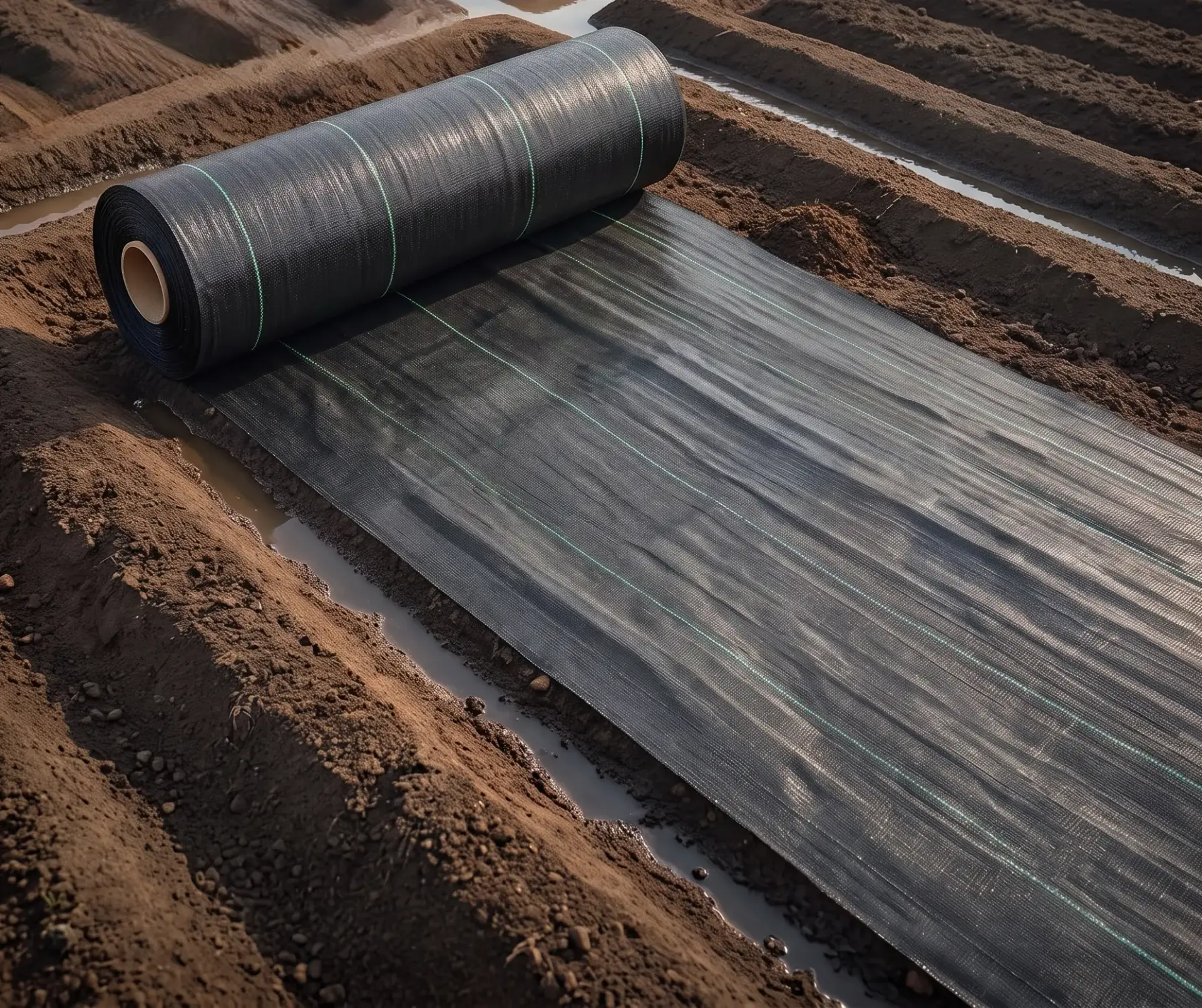
The standard commercial layout: fabric over the entire bed top and the walkway strips beside it, planting through slits in the bed section. This does three jobs at once — weed exclusion on the bed, a clean dry walkway for pickers, and light reflection up into the canopy from the pale weave, which flower crops use well.
GSM choice follows the structure: open fields and high-UV sites use 120 GSM for the extra years; polyhouses and shade-net rose units do well with 100 GSM since the roof blocks most UV. The polyhouse guide covers in-structure floors in detail; open gerbera fields follow the farm layout logic.
Planting and crop-cycle practice
- Lay before planting: Bed formed, fabric pinned, then planting slits cut exactly where plants go. Fewer slits, fewer weed entry points.
- Slit size discipline: Cut just large enough for the root ball. Oversized slits are the only place weeds can establish — 5 cm of spare opening is a weed nursery.
- Drip on top: Emitters sit on the fabric, delivering through the weave. No emitter clogging from soil splash, and fertigation reaches roots unchanged.
- Between cycles: Pull spent plants, sweep the bed, refresh media in slits if needed, replant. The fabric itself just keeps working — no rebuild between cycles, which on a flower farm means faster turnaround into the next season's planting slots.
Harvest-day differences growers report first
The changes a flower grower notices arrive within weeks. Pickers walk a clean, dry path at 7 AM without mud on their knees. No time lost weeding between flushes — labour redeploys to disbudding and grading, where it earns money. Stems come off clean with no soil splash on lower foliage, which means less grading waste in the packing line. And in the afternoon heat, the walkway surface runs cooler than bare soil, which pickers care about more than any brochure admits.
One gerbera unit we supply in the Pune belt put it plainly: their pre-mat season needed 6 weeding rounds; their first mat season needed 1, and that one was mostly slit-edge cleanup. The stem-quality improvement did the selling for the next farm over.
Cost picture for flower units
A typical open-field gerbera or rose bed block of 500 sq m needs about 5.5–6 rolls (coverage maths in the roll guide): roughly ₹40,000–₹48,000 in 100 GSM fabric. Against it: 5–6 weeding rounds per season at ₹1–₹2 per sq m per round, plus splash-related grading waste and crop turnaround time. Payback lands in the first 1–2 seasons for most units, then the fabric runs free for years — the worth-it analysis shows the full arithmetic for your wage zone.
Frequently Asked Questions
Is weed mat safe for rose and gerbera roots?
Yes. Woven fabric is water- and air-permeable, so roots breathe and irrigate normally. Only impermeable plastic sheeting harms roots — never use that under flowers.
Which GSM suits open-field gerbera farming?
120 GSM for open fields in high-UV zones; 100 GSM suffices under polyhouse or shade net. Both last multiple crop cycles with proper pinning.
Does ground cover affect flower colour or stem length?
Positively — cleaner nutrition, less splash disease and light reflection from the weave typically improve stem quality. No grower reports colour problems from fabric itself.
How do I replant through existing weed mat?
Cut fresh slits at the new spacing, lift old plants root-ball-first, and refresh slit media. The fabric between slits needs nothing — that is the system's advantage.
To pick the right fabric before your next planting cycle, the buying guide compares grades side by side, and for the nursery that raises your seedlings, the flooring guide completes the picture from propagation to field.
Shop the products mentioned
Premium weed control mats & jewellery — free shipping above ₹999.