
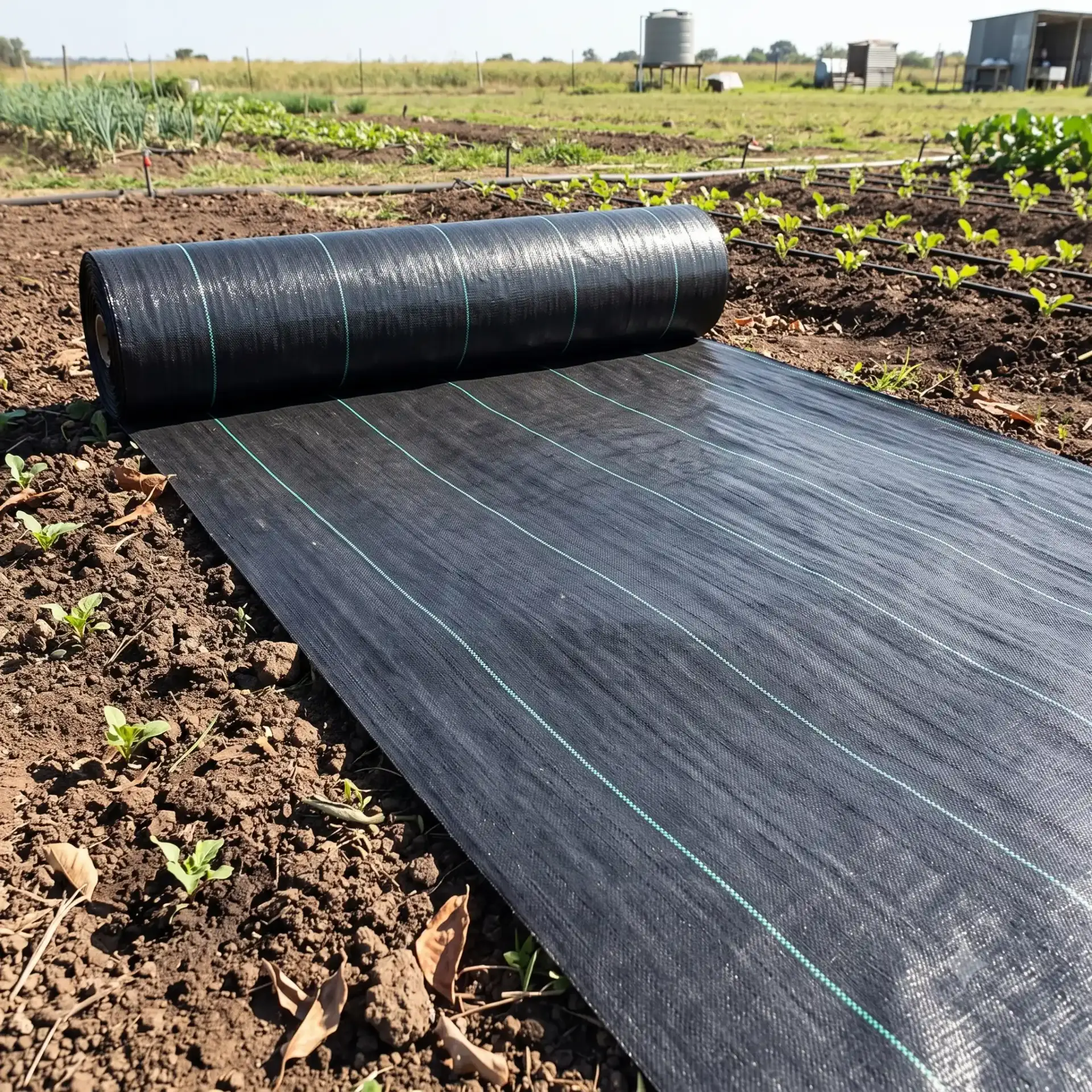
Weed Mat in Monsoon: Rainy Season Weed Control in India
Every Indian grower knows the monsoon paradox: the rains that feed your crop also run the year's biggest weed programme. Four months of humidity, and a field you kept clean through summer turns into a green carpet that no labour schedule can outrun. Hand-weeding in standing drizzle is miserable, expensive and endless — and this is exactly the season where weed mat earns its price the hardest. Here is how it performs through the rains, and the checklist to run before the first shower arrives.
Why monsoon weed pressure is a different animal
Summer weeds grow; monsoon weeds explode. Seed banks in the topsoil that sat dormant through April germinate in synchronised flushes with the first two rains, and each flush is denser than the last. A hand-weeding round that took two labour-days in May takes four in July — wet soil, wet clothes, slower work, and weeds regrowing from nodes the hoe missed. Across a season this is where the famous "weeding ate my profit" sentence gets written. Our weeding cost breakdown puts numbers on that bill; the short version is that monsoon rounds can be 40-50% costlier than summer rounds for the same area.
How woven mat handles rain (better than the alternatives)
The key property is drainage. Woven polypropylene fabric lets water pass straight through into the soil — no puddling on the surface, no runoff channels, no sheet erosion on your beds. Compare that with plastic sheet mulch, where rain pools on top, slides sideways, and in heavy spells undermines the sheet edges and the beds below them. Compare it with bare soil, where every big shower compacts the surface and prints a fresh weed flush. The mat is the only ground-cover option that stays working through the wettest months without creating its own water problem — the full material comparison is in weed mat vs plastic sheet vs mulch.
The pre-monsoon checklist (do this in June)
- Clear and level: Strip existing weeds and level bed tops — mat laid over live weeds just gives them a dark room to keep growing; the installation guide covers the ground-prep steps properly.
- Roll before first flush: Lay mat before the first serious shower germinates the seed bank. Mat over bare soil beats mat over sprouted weeds by weeks.
- Pin generously: Monsoon wind gusts and water flow lift edges that held fine in May. Halve your pin spacing along field edges and water-flow lines — our fixing guide has the spacing chart.
- Check drainage paths: The mat passes water through the weave, but your field's own surface drainage still decides whether water stands. Open the channels before the rains, not after the first flooding.
- Overlap rolls 10 cm: Where two roll edges meet, overlap generously and pin the seam. Monsoon is when under-priced 5 cm overlaps start unzipping.
GSM for monsoon exposure
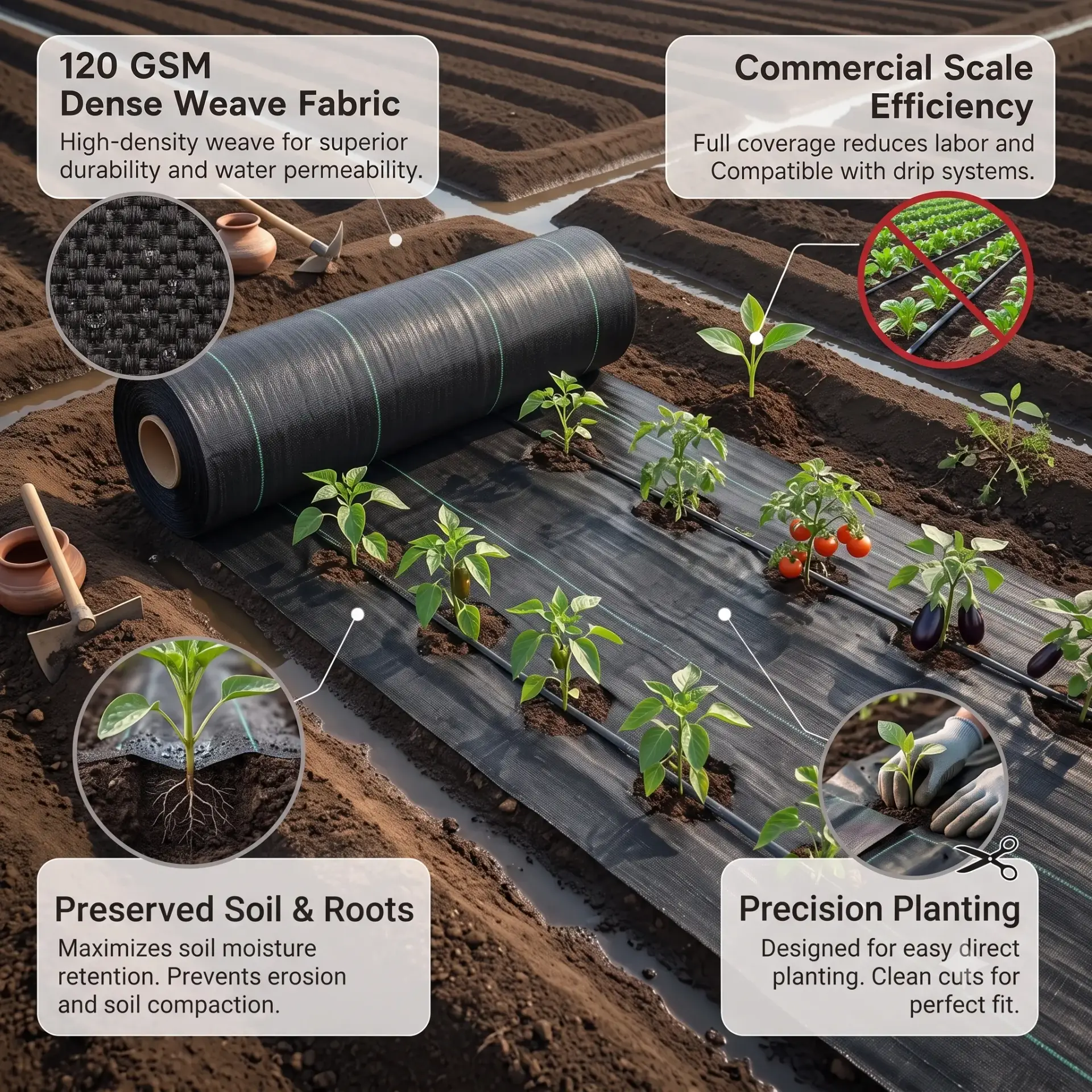
Rain itself does not wear the fabric — the wear comes from water flow, debris impact and traffic on wet ground. For sheltered beds and polyhouses, 100 GSM (₹6,999/roll) performs fine through monsoon. For open blocks with slope, runoff lines or trolley movement in the wet, 120 GSM (₹7,999) is the grade we recommend — heavier weave, better tear resistance under flowing water and debris. One season of avoided monsoon weeding rounds typically covers the price difference; the cost-benefit breakdown runs the full sums.
What the monsoon actually looks like with mat down
Through July and August, your covered beds stay bare and your neighbour's explode — that contrast alone converts more farmers than any blog post. The practical differences crews notice: no weeding rounds at all on covered area (the season's biggest saving), drier bed surfaces between showers which means fewer fungal starts around collars, and walkable paths after rain because the fabric firms the surface instead of turning to mud. Post-monsoon, lift the debris, rinse if silted, and the mat rolls up for next season — the maintenance guide covers the post-rain routine.
Two monsoon truths we tell everyone
First, the mat stops weeds, not water management — if your field floods for weeks, no fabric fixes that; fix the drainage first, mat second. Second, edges are everything in monsoon: 90% of monsoon mat failures we see are edge lifts from under-pinning, not fabric failure. Pin like you mean it, and the system holds.
Monsoon weed control FAQs
Can I lay weed mat during active rainfall?
Practically no — wet soil does not take pins well, and you want the mat down before the first germination flush anyway. The right window is the dry gap between pre-monsoon showers; even a few days of head start matters.
Does waterlogging under the mat rot my crop roots?
The fabric itself drains freely — standing water means your field's own drainage is the issue, with or without mat. Open channels, level the beds, and the weave moves rain into the soil exactly as bare ground would, minus the weeds.
Will strong monsoon wind lift the mat?
Not when pinned properly — halve the normal pin spacing on edges and seams before the rains. Wind lift is an installation shortcut problem, not a fabric problem; the fixing guide's spacing chart prevents it entirely.
Is the mat slippery to walk on in the rain?
Woven polypropylene grips better than wet plastic sheet or wet soil — crews generally find mat-covered paths safer in drizzle than the alternatives. Mud still collects on the surface in heavy silt events; a brush-down restores grip.
Should I still hand-weed anywhere during monsoon?
Only at mat edges and planting holes where a stubborn weed occasionally finds light — a two-minute spot check per week replaces entire weeding rounds. The suppression is not magic; it is simply that 95% of the flush never gets light.
Shop the products mentioned
Premium weed control mats & jewellery — free shipping above ₹999.