

Weed Mat for Tomato Farming: Bed Setup & Yield Benefits
Tomato is the crop where weed neglect hurts fastest. A weedy tomato field does not just lose yield at the end — it loses it quietly all season, because weeds drink the same drip line your crop is counting on, and every hand-weeding round around tomato beds damages surface roots that tomatoes are unusually sensitive about. This is why tomato growers were among the first to switch to weed mat in every region we supply. Here is the complete setup, cost picture, and what actually changes in season.
Why tomatoes punish weed competition harder than most crops
Tomato roots sit shallow, mostly in the top 20-30 cm — exactly the zone where weeds concentrate. Every hand-weeding pass around a tomato bed slices fine feeder roots, and the plant responds with a week of sulking growth you will never get back. Add the disease angle: weeds hold humidity against the canopy base, and humidity at the collar zone is how early blight and leaf curl problems start rolling through a field. A weed mat interrupts all three problems at once — no competition, no root-slicing passes, and a dry, reflective-free soil surface under the canopy.
The bed setup that works
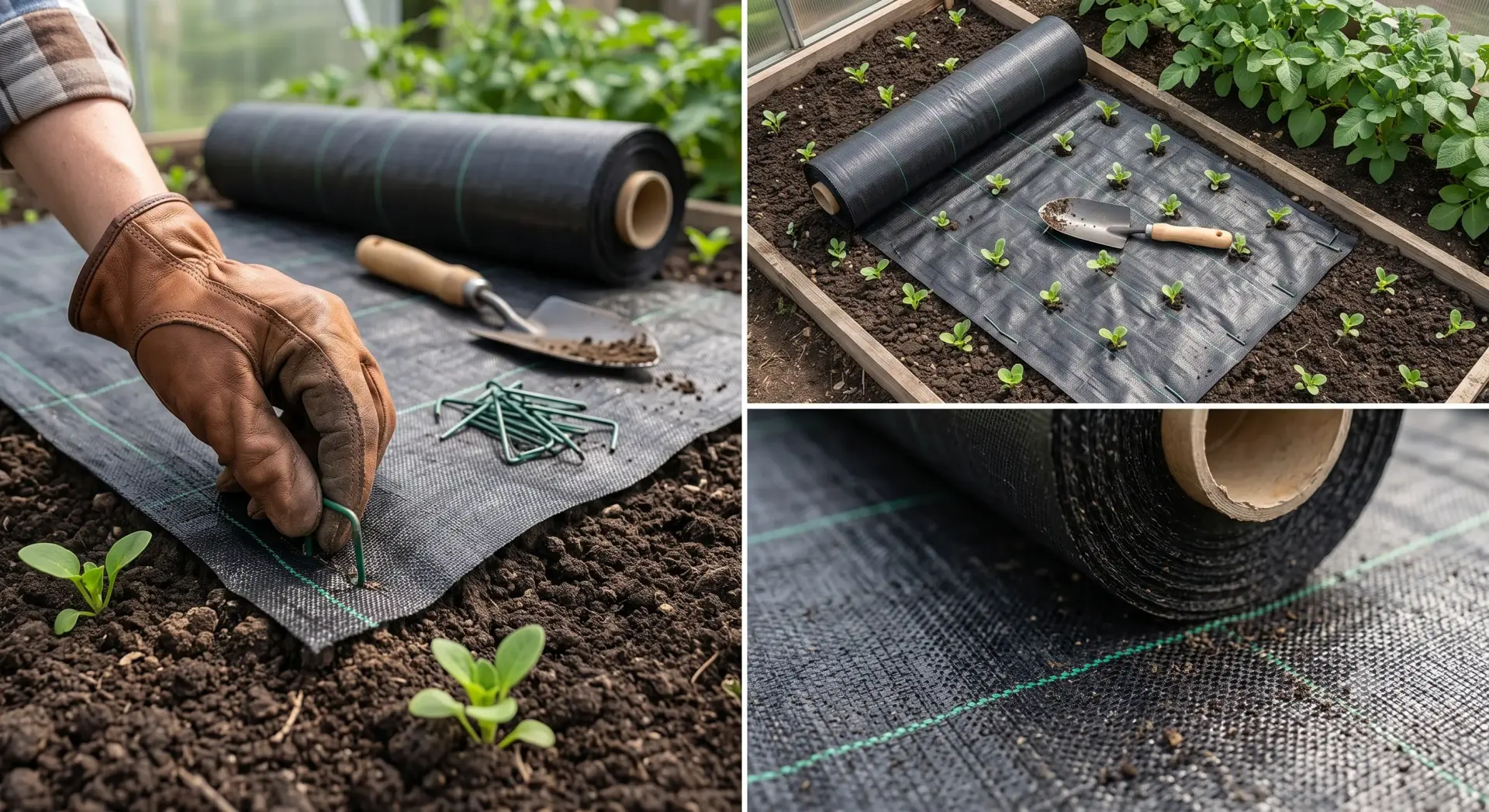
- Bed width: A standard 1-metre-wide weed mat roll like our 100 GSM 1x100 m roll covers one bed of roughly 75-80 cm planted width plus shoulder strips. Mark bed centres first, roll the mat over beds and furrows, then pin edges every 1-1.5 metres.
- Planting holes: Burn or cut holes at your spacing — for tomato, 45-60 cm between plants on the bed. Cross-cut holes (two slits) beat circular cuts: they close back around the stem and stop light reaching weed seedlings in the hole.
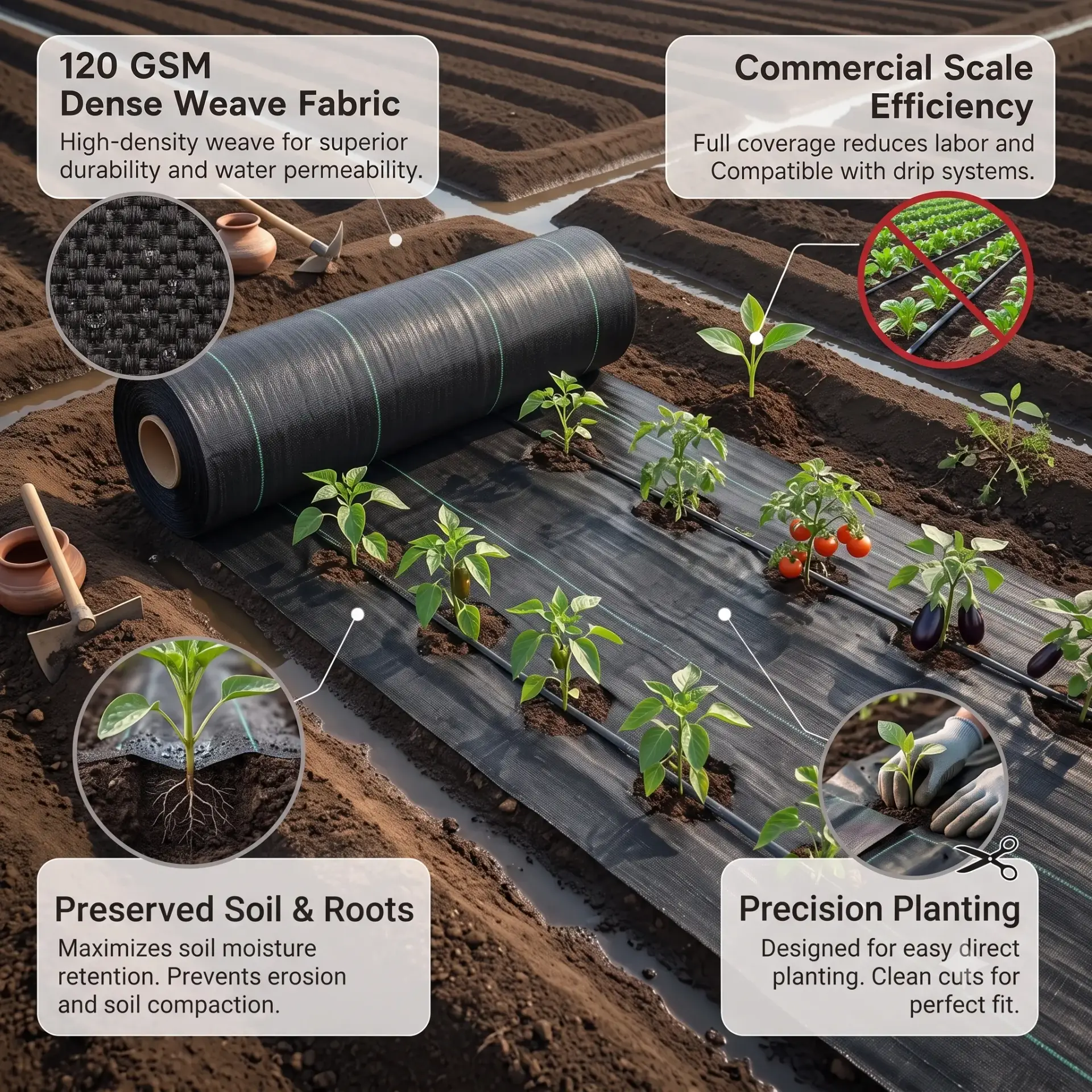
- Drip line: Lay drip under the mat, not on top. Under-mat drip loses almost nothing to evaporation, and emitters stay clean of dust. This is also where the water savings show up — our customers report visibly longer intervals between irrigation rounds once the mat is down.
- Fixing: Use pins or U-wires at edges and every few metres along the roll; our pins and fixing guide covers the spacing that stops wind lift and edge curl.
GSM choice for tomato: 100 or 120?
For one to two seasons of use in open-field tomato, 100 GSM woven fabric is the honest sweet spot — it drains well, handles foot traffic during harvest rounds, and costs ₹6,999 for a full 1x100 m roll (about ₹70 per square metre). Step up to 120 GSM (₹7,999 per roll) when the field sees trolley traffic, multi-season reuse, or harsh open exposure — polyhouse tomato growers almost universally choose 120 GSM for that reason. The full comparison logic is in our weed mat buying guide, but for tomato specifically: open field 100 GSM, polyhouse or two-season plan 120 GSM.
The labour maths growers care about
A typical hand-weeding programme for an open tomato field runs 4-6 rounds per season. At ₹350-400 per labourer-day, even a 2-person crew doing one round per acre every 3-4 weeks burns through ₹8,000-12,000 per season per acre — and each round costs you root damage on top. One roll of 100 GSM mat covers roughly 1,000 square metres; most growers cover their most weed-pressured blocks first and expand yearly. First season, the mat usually pays for itself in saved labour rounds alone on the covered area; the yield and disease benefits after that are effectively free. Our installation cost guide works through DIY versus labour numbers in detail.
What changes through the season
Week 1-2: nothing dramatic — the mat just stops the first weed flush that normally starts with the first irrigation. Week 4-6: the difference becomes visible; beds stay clean while untreated check rows sprout. Flowering onward: the biggest and least expected benefit — pickers move faster on clean mat, fruit stays cleaner with less soil splash, and harvest rounds shrink because nobody is stepping around weeds. Post-monsoon blocks with mat down dry out faster and suffer less collar-zone humidity.
Two honest cautions
First, the mat is not a fertiliser or a plant-food strategy — it removes weed pressure, nothing more; your nutrition schedule stays exactly as before. Second, snails and rodent activity under the mat is a real thing in some pockets; if your field has a history, keep the edges pinned tight and check the bed shoulders monthly. Neither caution changes the economics — they are just the "know before you roll" details we would tell a neighbour.
Tomato grower FAQs
Can I lay weed mat after tomato plants are already in the ground?
Yes, and it is common when a grower switches mid-season. Cut the mat around existing plants carefully, work it under the canopy in sections, and pin as you go. It is slower than laying before transplanting, but the weed-flush protection from that point still saves the later weeding rounds.
Does weed mat affect tomato fruit quality?
Indirectly, yes — cleaner fruit with less soil splash, more even soil moisture under drip, and fewer humidity-driven disease starts. Growers most often notice the cleanliness difference at harvest packing, where soil-stained fruit gets sorted out.
How many rolls do I need per acre of tomato?
One acre is roughly 4,000 square metres; at 1x100 m per roll that is 40 rolls for full coverage. Most growers start with 10-15 rolls on their worst blocks and expand next season — our coverage area guide has the per-bed maths.
Can I reuse the mat next tomato season?
100 GSM typically gives one solid open-field season or two gentle ones; 120 GSM is the reuse grade. Roll it up post-harvest, store dry and shaded, and inspect for tears — the cleaning and storage guide covers the full off-season routine.
Is the mat compatible with mulch film practices I already follow?
They solve different problems — mulch film is single-season plastic; woven mat is multi-season fabric that breathes and drains. Many growers replace film with mat entirely for tomato; the comparison is laid out in weed mat vs plastic sheet vs mulch.
Shop the products mentioned
Premium weed control mats & jewellery — free shipping above ₹999.