
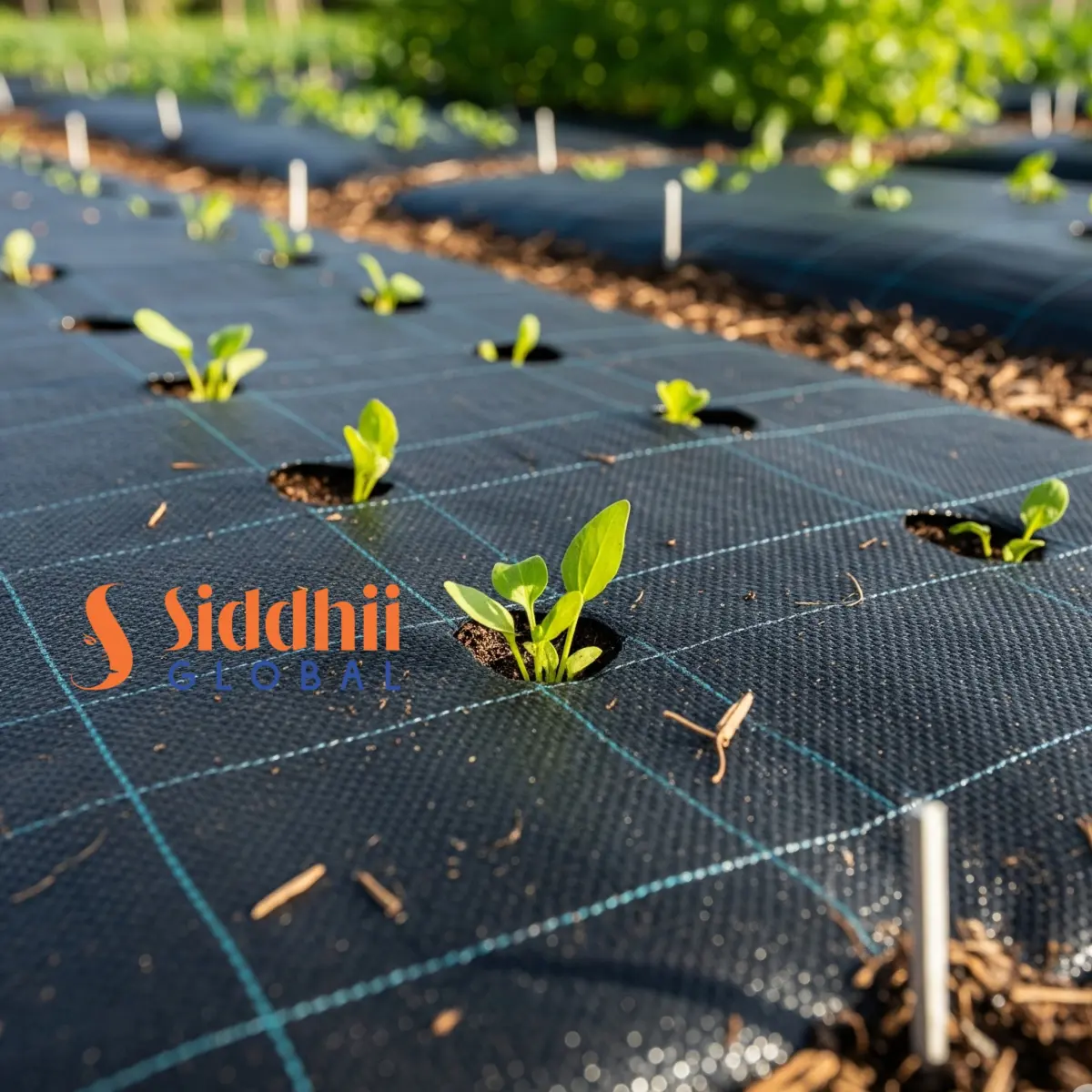
Weed Mat for Strawberry Farming: Why Growers Switch
No crop exposes weedy ground faster than strawberry. The fruit sits directly on the surface, the picking crew kneels over every plant repeatedly, and one dirty, weedy bed shows up in the punnet at the counter. That is why strawberry growers — Mahabaleshwar, the Himachal belts, the newer plains projects — were early converts to weed mat, and why almost none of them ever went back. Here is what the switch actually involves and what it changes.
Why strawberry needs ground cover more than other fruits
Three crop-specific reasons. First, fruit contact: berries resting on bare soil pick up stains, rot spores and mud splash after every rain or irrigation — fruit on clean woven fabric stays cleaner and grades higher. Second, pick frequency: strawberry is picked every 2-3 days at peak, and weeds slow every single round for months; a clean bed is a crew-speed issue as much as a plant-health one. Third, the runner problem: strawberry spreads by runners, and on bare soil runners root wherever they touch — uncontrolled runner rooting steals plant energy and creates a tangled bed. On mat, unwanted runners root less easily, and the ones you want for propagation you pin deliberately into pots.
The bed setup
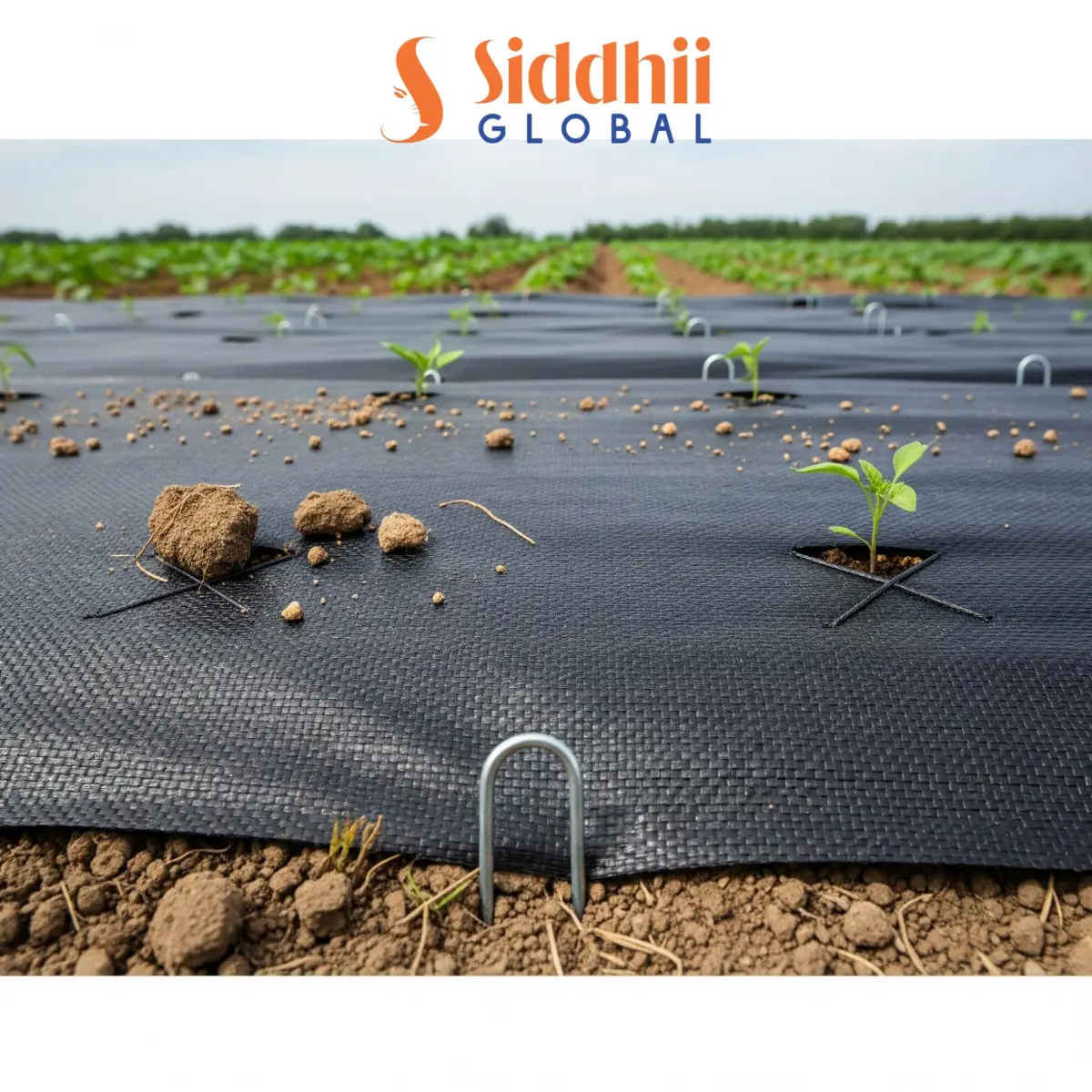
- Cover first, plant second: Roll the mat over prepared beds before transplanting runners. Our 100 GSM 1x100 m roll (₹6,999) covers one standard bed line of 1 m width comfortably — strawberry beds are typically narrower than vegetable beds, so coverage stretches further per roll.
- Spacing holes: 30x45 cm is the common strawberry spacing; cut cross-slits at spacing, plant through, and pin the mat edges every metre. Slits close around crowns and block light to the hole.
- Drip underneath: Strawberry hates wet foliage — under-mat drip delivers water to roots with the fabric wicking it evenly, and the bed surface stays dry enough to discourage botrytis starts.
- Small plots and home beds: For kitchen-garden strawberry or nursery trial beds, pre-cut squares are simpler than a full roll — the 1.2x1.2 m garden mat (₹299) covers a family berry patch in one piece.
What the season looks like with mat down
The first visible change is picking speed — crews move down clean beds without pausing to part weeds, and pick rounds shorten measurably. The second change shows at grading: fewer muddy, stained berries in the sorting tray, because nothing touched soil. The third change is the one growers mention most by month three: no weeding rounds at all on covered beds, which in a strawberry season (October to April in the hills) is the labour saving that pays for the mat several times over. For context on the wider economics, our weeding cost breakdown puts hard numbers on the hand-weeding bill the mat replaces.
GSM and reuse logic for strawberry farms
Strawberry beds see light machinery but constant foot traffic, so 100 GSM woven fabric handles a standard season comfortably and usually survives for reuse if the farm rotates crops. Farms running pick-your-own tourist operations — a growing trend around hill stations — tend to jump straight to 120 GSM (₹7,999) because visitor traffic is harder on fabric than any crew. Either way, one roll does roughly 1,000 square metres; our coverage guide helps you convert bed lengths into roll counts before ordering.
The runner management bonus
Something strawberry growers discover mid-season: the mat turns runner chaos into a manageable system. Because runners root poorly on bare woven fabric, the bed stops tangling on its own. When you do want propagation, pin the chosen runner into a small pot of soil placed on the mat — the round mat with chain (₹399) works well as a clean propagation station ring around mother plants. Controlled rooting means stronger daughter plants for next season and a bed that stays harvest-shaped all year.
Honest limitations
Slugs love the cool damp underside of any ground cover, and strawberry attracts them — if your plot has slug history, combine the mat with your usual slug monitoring rather than assuming the mat solves it. Second, the mat does not replace straw mulch's insulation role in frost-prone pockets; some hill growers keep a light straw layer on top of mat for winter insulation, which is fine — just expect to top it up less often since weeds are already handled underneath.
Strawberry grower FAQs
Is weed mat better than plastic mulch for strawberry?
For multi-season and pick-your-own operations, yes — fabric breathes, drains and reuses, while film is single-season and turns slippery when wet. The full material comparison is in weed mat vs plastic sheet vs mulch. For one cheap quick season on flat ground, film still has its place.
Will berries rot on the fabric surface?
Less often than on soil — woven fabric drains and dries quickly, so fruit contact points stay drier than mud. Keep drip under the mat and the bed surface stays dry enough to make fruit-rot pressure lower, not higher.
How many seasons does the mat last in strawberry?
100 GSM: one to two seasons depending on traffic; 120 GSM: several. Storage between seasons matters as much as GSM — dry, shaded, rolled — which the lifespan guide covers in detail.
Can runners still be used for propagation on mat?
Yes, deliberately: pin chosen runners into soil-filled pots set on the mat. Unwanted runners root poorly on the fabric, so the bed stops self-tangling and propagation becomes a choice rather than an accident.
What about fertilising through the mat?
Water-soluble fertigation through under-mat drip is the normal route and works unchanged. For solid top-dressings, lift-and-replace the mat edge on the relevant section — the fabric is pinned, not glued, so it handles this fine a few times a season.
Shop the products mentioned
Premium weed control mats & jewellery — free shipping above ₹999.